17 Fall Decorations That Actually Made My Apartment Feel Cozy (and 3 I’d Skip)
I used to be the person who bought a pumpkin, put it on the coffee table, and called it decorated.
Then two Octobers ago I moved into a 600-square-foot apartment with exactly one windowsill and a landlord who “preferred” I didn’t nail anything into the walls.
That first fall, I tried the full seasonal overhaul — garlands, wreaths, a ceramic turkey — and by November I was tripping over a box of plastic leaves I had nowhere to store.
So I started over. I kept what actually made the space feel warmer and got rid of everything that was just there to look seasonal in photos.
Here’s what I learned: 17 fall decorations isn’t really about seventeen things. It’s about layering a handful of textures, colors, and light sources that change how a room feels without turning it into a craft store.
Some of these are things I do every year now. A couple are things I tried once and won’t repeat.
And a few are the kind of cheap, five-minute swaps that do more work than a whole bin of dollar-store pumpkins.
If you’re in a small apartment, a dorm, or just don’t want to store a second holiday’s worth of stuff, this is the version of fall decorating I actually live with.
I’ll tell you what it costs, what I’d skip, and the one mistake I made with dried botanicals that I’m still annoyed about.
1. Dried Botanical Arrangements (Not a Craft-Store Wreath)
The reason dried botanicals matter more than another pumpkin is height. In a small space, your surfaces are already crowded — what you need is something vertical that draws the eye up and doesn’t need to be moved every time you eat dinner. A dried arrangement in a tall vase does that, and it doesn’t die on you in a week like fresh flowers do.
Mikel Welch, an interior designer, told Martha Stewart that he loves dehydrated botanicals because they “naturally take on those beautiful autumnal tones” — baby’s breath, hydrangeas, and eucalyptus are his go-tos. I’ve had good luck with a simple bunch of dried eucalyptus and pampas grass in a vintage ceramic urn I found at a thrift store for $6. The key is not making it too perfect. Welch says to “let the stems feel a little wild,” and he’s right — the moment it looks arranged is the moment it looks like you bought a kit.
Here’s where I messed up: I put a dried arrangement directly above a radiator my first year, and by December the stems were brittle and snapping. Keep dried material away from heat sources and direct sun. If you’re buying instead of foraging, a mixed autumn bunch from World Market runs about $15–$25 and lasts through Thanksgiving.
Pro tip: Skip the craft-store “fall floral” aisle. The faux stuff with plastic berries looks fake up close. A single bunch of dried wheat or eucalyptus from a grocery store florist costs less and reads as intentional. If you want filler, baby’s breath is cheap and forgiving.
2. Amber Lighting (The Single Biggest Cozy Upgrade)
If you do one thing from this list, do this. Swapping your regular white bulbs for amber ones changes the entire mood of a room more than any decoration on a shelf. Brittny Button, founder of Button Atelier, described amber lighting as giving “a cocktail hour vibe that sets the tone that the home is in relaxed mode” — she said she feels herself exhale when she uses it.
I was skeptical because I thought amber bulbs would make everything look yellow and dingy. They don’t. They make your skin look better, your wood furniture look richer, and your apartment look like it belongs in a Nancy Meyers movie. Kyle Richards has done this throughout her home, and I get it now. I swapped the bulbs in my two living room lamps and my bedroom lamp for amber LEDs, and it cost me about $12 total. The overhead light stays off after 6pm.
Pro tip: Don’t swap every bulb. Keep task lighting (desk lamp, kitchen counter) in a neutral white so you can still see what you’re doing. Amber is for ambiance, not for chopping onions.
3. Chunky Knit Throw Blanket (the One You’ll Actually Use)
A throw blanket is the cheapest way to change the largest surface in your apartment — the sofa or the bed — without buying new furniture. The catch is that most “cozy” throws are thin, scratchy, or so small they only cover one leg. I’ve bought three over the years. The one that’s still on my sofa is an oversized chenille knit from Amazon that was $68 and has survived two winters of daily use and one accidental wash.
Lauren Covino-Smith, a designer, described her ideal throw as “an oversized chenille blanket big enough to wrap up in and still have some left to share with my two black labs.” That’s the standard. If it doesn’t cover you and a pet, it’s a decorative scarf, not a throw.
Pro tip: Buy in a color that works with your existing sofa, not a color that screams “fall.” A rust or mustard throw on a grey sofa reads seasonal. A rust throw on a beige sofa with rust pillows and a rust candle reads intentional. Pick one autumn color and repeat it two or three times instead of buying every fall shade you like.
4. Rich Reds and Moody Earth Tones (Not Just Orange)
The reason traditional orange-and-brown fall decor looks cheap in a small apartment is that it’s too literal. Designers are moving toward deeper, moodier reds — oxblood, merlot, maroon — and earth tones like dark purples, olives, and moss greens. Button said she “drenched” her kitchen in oxblood walls, including the ceiling, and it “creates the effect of being embraced, as if the room gives you a hug.” I can’t paint my rental, but I can buy a set of oxblood velvet pillow covers, and that’s most of the effect.
Pro tip: If you’re not ready to commit to a deep red, start with a single textile — a table runner, a set of napkins, or pillow covers. Pillow covers that fold flat take up almost no storage, which matters when you’re swapping them out again in December.
5. Burrowcore Layering (the Anti-Clutter Approach)
“Burrowcore” sounds like a made-up internet word, and it kind of is, but the idea behind it is genuinely useful for small spaces. Michelle Gage, an interior designer, described it as “creating a home you can sink into” — cozy, layered, cocoon-like, built around pieces that feel as good as they look. The practical version is this: instead of adding more objects, you add more texture and softness to the objects you already have. A textured throw on the sofa. A knit pillow cover on a chair. A candle in a ceramic holder instead of a plastic one.
I tried this last year and it was the first fall where my apartment felt cozy instead of cluttered. The difference is that burrowcore doesn’t ask you to store anything. You’re swapping, not accumulating.
Pro tip: Pinterest searches for “warm lighting” were up 66% in a single month heading into this fall, which tells you people are craving atmosphere over stuff. If you’re not sure where to start, start with light. It’s reversible, cheap, and it works.
6. Ceramic Accents in Warm Glazes
Ceramic pieces — a small vase, a candle holder, a bowl for keys — are the kind of fall decor that doesn’t scream fall, which is exactly why I like them. They work in October and they work in February. Target and IKEA both have ceramic pieces in warm glazes (amber, cream, deep green) that look more expensive than they are. I bought a small ceramic pumpkin-shaped candle holder at Target for $5 and it’s the only pumpkin-shaped thing I own that I don’t feel silly about.
Pro tip: If you’re buying ceramic decor, hold it. If it feels light and hollow, it’ll look cheap on your shelf. A little weight makes a big difference.
7. Fall Wreaths That Don’t Look Like a Hobby Lobby Display
A wreath is the one piece of fall decor that lives outside your apartment, which means it doesn’t compete for surface space. That’s a genuine advantage. The problem is that most store-bought wreaths are either covered in glitter or smell like cinnamon plastic. A simple grapevine base with dried material — magnolia leaves, seed pods, dried grasses — looks better and costs less if you make it yourself. Epic Gardening recommends a “half moon of dried material on an exposed grapevine form,” which is exactly the kind of asymmetrical, not-too-perfect look that reads as foraged rather than purchased.
I made mine two years ago with a $4 grapevine wreath form from Michaels and dried hydrangeas from my mom’s garden. It’s still hanging.
Pro tip: If you’re not crafty, a tobacco basket or vintage grain sifter from a thrift store can serve as a wreath alternative. Hang it on the door with a single dried stem tucked into it. It takes thirty seconds and looks like you know what you’re doing.
8. The “One Autumn Color” Rule (for People Who Overbuy)
This is less a decoration and more a rule that makes all the other decorations work. Pick one autumn color — rust, deep green, mustard, plum, or warm brown — and repeat it in two or three places: a throw, a tea towel, a small piece on the table. That’s enough to make the room feel deliberate. When I followed this rule, I stopped buying things that didn’t go together and my apartment stopped looking like a seasonal aisle exploded.
Pro tip: Your one color should already exist somewhere in your apartment. If your kitchen has a green tile backsplash, pick a deep green. If your sofa has rust piping, pick rust. You’re extending what’s there, not fighting it.
9. Swap Art, Don’t Buy New Frames
Replacing one piece of art for the season is a small change that has an outsized effect, and it costs almost nothing if you use the frame you already have. Swap in an autumn photograph, a vintage botanical print, or a simple landscape. Store the previous print flat behind it. I did this with a $3 botanical print from an antique mall, and it changed the whole wall without a single new hole in the drywall.
Pro tip: If you’re in a rental with picture-hanging restrictions, use adhesive strips rated for the weight of your frame. I’ve had a cheap frame fall off the wall before because I used the wrong strips. Don’t be me.
10. A Fall Tablescape You Can Eat At
The reason most fall tablescapes don’t work in small apartments is that they’re designed for dining rooms nobody uses daily. If your table is also your desk, your dinner table, and your laundry-folding surface, you can’t have a tall centerpiece that has to be relocated three times a day. Kim Seybert’s fall table trend report points toward “tailored texture, graphic pattern, warm spice tones, and heritage prints” — which sounds fancy but translates to: a runner, cloth napkins, and one bowl of fruit. That’s it.
I use a rust-colored table runner I bought for $12 and a ceramic bowl for apples. It takes thirty seconds to set up and it doesn’t interfere with eating.
Pro tip: Use food as part of the color scheme. Apples, pears, squash — they look seasonal while still being food you’ll actually eat. Just don’t display anything that’s about to rot. “Rustic” and “rotting” are not the same thing.
11. A Cheap Pumpkin Hack That Looks Designer
I’m not going to tell you to buy twelve pumpkins. I’m going to tell you about the sweater pumpkin. You take a $1 cable-knit sweater from Goodwill, cut the sleeves off, and slide them over a Dollar Tree faux pumpkin. The result looks like something from a boutique catalog and costs about $3. I made three of these last year in an afternoon and they’re the only pumpkins I’ve ever owned that people asked about.
Pro tip: Use a real pumpkin instead of faux if you want it to last through Thanksgiving. Faux pumpkins are fine for the sweater hack, but real ones look better in arrangements and you can compost them.
12. Vertical Decorating (for Apartments With No Surface Space)
Vertical decorating is the single most useful strategy I’ve found for small-space fall decor. If you’re short on counter or table space, a hanging garland or a wall-mounted shelf with a few seasonal pieces does more than a crowded coffee table. I have a narrow wall shelf above my desk that holds a small ceramic vase, a candle, and one mini pumpkin. It’s the most “fall” corner in my apartment and it takes up zero floor space.
Pro tip: If you can’t hang anything, use the top of your kitchen cabinets or the back of your toilet tank. Both are surfaces you’re not using for anything else, and both are high enough that small seasonal pieces read as intentional.
13. Lanterns With Flameless Candles (Better Than Real Candles for Rentals)
Lanterns with LED candles give you the glow of real candles without the fire risk, the soot, or the “I forgot to blow it out and now I’m stressed at work” feeling. Voho brown glass candlestick holders on Amazon are $26 for a set, and Homemory flameless taper candles are $17. I have three lanterns in different sizes clustered on my entryway table, and I turn them on every evening from October through December. The batteries last about six weeks with daily use.
Pro tip: If you do want real candles, keep them away from dried botanicals. I learned this the boring way — a dried eucalyptus stem caught a spark from a candle I’d placed too close, and while nothing caught fire, the smell was not what I was going for.
14. Botanical-Inspired Prints on Pillows and Throws
If you’re not ready to commit to a full color overhaul, botanical prints are a low-stakes way to bring fall in. Small floral or leaf motifs on pillows, throws, or drapery “bring a quiet daintiness to a space,” according to Button. I have one pillow cover with a subtle leaf print in rust and cream, and it’s the piece that ties my whole sofa together. It was $8 on Amazon.
Pro tip: One botanical print pillow is enough. Two is a theme. Three is a pattern explosion. Keep it to one and let the solid textiles do the rest.
15. Warm Textiles in the Kitchen (the Most Overlooked Room)
Fall decor tends to stop at the living room, but your kitchen is where you spend a lot of time in the colder months. A rust-colored tea towel or a checked cloth makes a white rental kitchen feel seasonal, and it also dries dishes. I bought a set of four fall-colored dish towels for $10 and they changed the entire feel of my kitchen more than any shelf decoration ever did.
Pro tip: Don’t buy decorative-only kitchen items. If it doesn’t work — if you can’t dry a plate with it — it’s clutter. The best fall kitchen decor is functional.
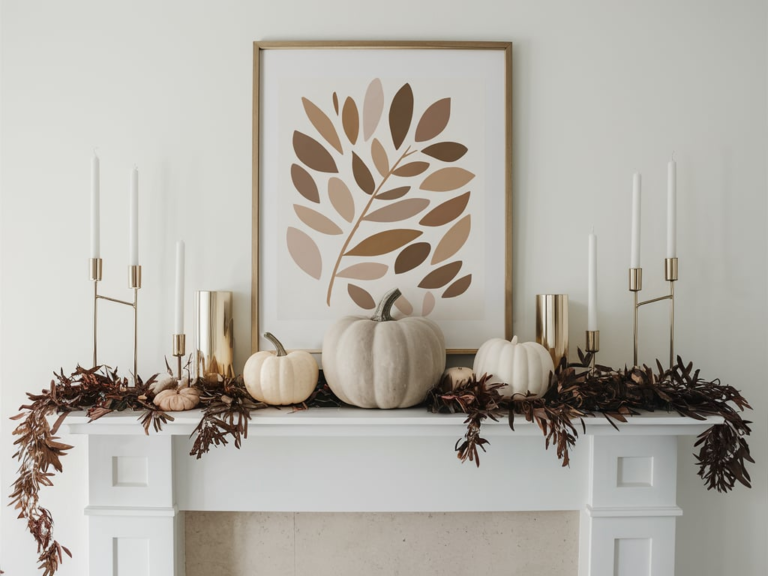
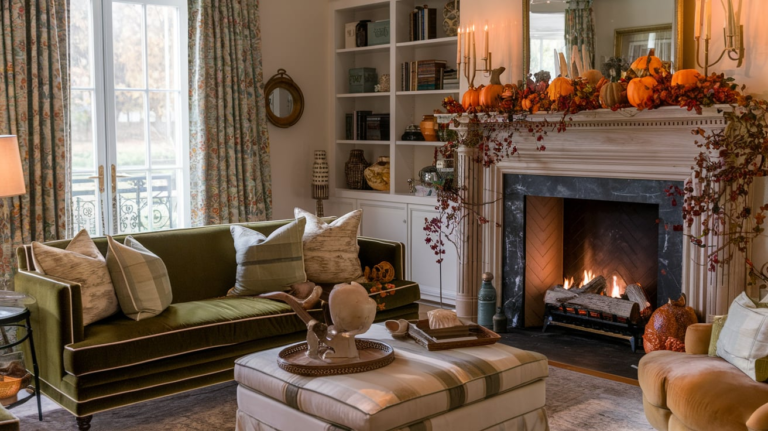
16. Garland on the Mantle, Shelf, or Doorframe
A garland is a lot of visual impact for very little effort, but most garlands are too long, too bushy, or too glittery. A dried botanical garland — jute rope strung with dried elements — drapes across a mantle or shelf without looking like tinsel. If you don’t have a mantle, drape it over a doorframe or along the top of a bookshelf. I have one on my entryway shelf, and it makes the whole corner feel finished.
Pro tip: If you’re in a dorm or a strict rental, command hooks on a doorframe work fine for a lightweight garland. Test the hook with the garland’s weight before you commit, or you’ll find it on the floor at 2am.
17. The “Food as Decor” Trick (Apples, Pears, Squash)
This is the cheapest fall decoration there is, and I think it’s underrated. A bowl of apples or a few squash on a tray looks seasonal, costs almost nothing, and you eat it instead of storing it. The rule is simple: only display what you’ll actually eat, and store the rest properly. Rotting produce is not a design statement.
Pro tip: Butternut squash and acorn squash look great on a tray for weeks without going bad, and then you roast them. That’s the whole system.
What I’d Skip (and What I Learned the Hard Way)
Skip the craft-store faux floral stems. I bought a “fall bouquet” of faux eucalyptus and berries my first year. It looked fine in the store and fake on my table. Real dried stems cost the same or less and look ten times better.
Skip 3D pumpkin-shaped everything. Ceramic pumpkin candle holders are cute. A ceramic pumpkin bowl, a ceramic pumpkin mug, a ceramic pumpkin figurine — that’s a collection, and collections need storage. One pumpkin-shaped thing is charming. Five is a personality.
Skip the full seasonal overhaul if you’re in a small space. The box of decorations you have to store for eleven months is the real cost of fall decor, not the price tag. Buy things you can swap, fold, or eat. That’s the system that actually works when you don’t have a garage.
How Much Does Fall Decorating Actually Cost?
| Category | Budget | Mid-Range | Worth It? |
|---|---|---|---|
| Lighting (amber bulbs or LED candles) | $10–$15 | $25–$40 | Yes — biggest impact per dollar |
| Throw blanket | $20–$30 | $60–$80 | Yes if you’ll actually use it |
| Dried botanicals (one bunch) | $10–$15 | $25–$40 | Yes — lasts all season |
| Pillow covers (set) | $8–$15 | $20–$35 | Yes — fold flat, easy to store |
| Wreath (DIY grapevine) | $4–$10 | $25–$50 (store-bought) | DIY is better here |
| Pumpkins (real or faux) | $3–$8 | $15–$30 | Real ones are cheaper and look better |
| Tablescape runner + napkins | $10–$15 | $25–$40 | Yes if you eat at the table |
My total for a fall refresh that actually changed how my apartment feels: about $75. That’s the throw blanket, a set of amber bulbs, a dried arrangement, one pillow cover, and a table runner. Everything else I already had or foraged.
FAQs About Fall Decorations
What fall decorations look expensive but are actually cheap?
Dried botanicals in a thrift-store vase, amber lightbulbs, and a chunky knit throw. Those three together cost under $60 and do more than a $200 trip to a home decor store. The trick is texture, not quantity.
How do I decorate for fall in a small apartment without clutter?
Swap instead of adding. Change pillow covers, swap one piece of art, change the throw on the sofa. Add one vertical element — a wreath, a garland, a shelf arrangement — and keep your surfaces clear. If you have to store it for eleven months and it doesn’t fold flat, think twice.
What’s the best fall decoration for a dorm room?
Amber lighting and a small dried arrangement. Both are cheap, both fit on a desk, and both come with you when you move. Skip anything that needs to be hung with nails or takes up half your desk.
Are real pumpkins or faux pumpkins better for fall decor?
Real, if you’re using them as decor and then eating or composting them. Faux, if you want to do the sweater hack or keep them for next year. Real pumpkins look better in arrangements and cost less. Faux pumpkins look better after three weeks.
What fall colors are in for 2026?
Rich reds (oxblood, merlot), moody earth tones (dark purple, olive, moss), and warm neutrals. Orange is out; deep wine and olive are in. If you’re buying one new thing this season, buy it in one of those colors.
How do I make fall decor last through Thanksgiving?
Skip anything Halloween-specific. Pumpkins, dried botanicals, amber lighting, and warm textiles all work from October through November. If you want Halloween, add one small accent (a black candle, a spooky print) that you can remove on November 1st without redoing the whole space.
What I’d Do First If I Were Starting Over
If I were decorating my apartment for fall from scratch right now, I’d spend my first $20 on amber lightbulbs. Not a wreath, not a pumpkin, not a garland — lightbulbs. They change the entire mood of a room in a way that no object on a shelf can match, and they cost less than a pizza.
Then I’d buy one dried arrangement and one throw blanket in the same color family. Then I’d stop, live with it for a week, and see what still feels like it’s missing. Usually the answer is nothing. The apartment feels warm, it smells like the candle I already had, and I didn’t buy a single thing shaped like a leaf.
That’s the version of 17 fall decorations that actually works in a small space. Not seventeen objects. A few good textures, one good light source, and the discipline to stop before your apartment starts feeling like a storage unit for seasonal decor.