32 Concrete Patio Ideas That Don’t Look Like a Parking Lot Out Back
I spent two summers hating our plain gray slab patio before I realized the concrete itself was never the problem — it was everything I hadn’t done to it yet.
Concrete gets a bad reputation in outdoor design, mostly because so many of us are working with a builder-grade slab that was poured as an afterthought — flat, gray, zero texture — and then never touched again.
But concrete is actually one of the most flexible patio materials out there once you know your options: it can be stained, stamped, scored, resurfaced, or simply dressed up with the right furniture and layout choices, often for a fraction of what tearing it out and replacing it with pavers or stone would cost.
My brother-in-law Mark, who does a lot of his own backyard projects, redid his plain concrete patio with a stain and a scored pattern over a single weekend, and it’s consistently the thing people ask about first when they come over.
His take: “Everyone assumes concrete means starting over. Most of the time it just means finishing the job the builder didn’t.”
These 32 ideas are organized by approach — resurfacing and color treatments, pattern and texture techniques, structural additions, and furnishing and styling moves — so whether you’re working with a weekend and a small budget or planning something bigger, there’s a starting point here.
What Actually Makes a Concrete Patio Look Intentional
A few honest things first. Plain gray concrete isn’t inherently the problem — it’s usually the lack of any color, texture, or defined edge that makes a patio read as leftover construction rather than a designed outdoor space.
Most concrete transformations fall into two categories: changing the surface itself (stain, stamp, overlay) or building around it (furniture, shade, plantings, defined borders) — and you genuinely don’t have to do both to see a real difference.
And unlike pavers or natural stone, a lot of concrete work can be done directly over an existing slab, which keeps both the cost and the timeline dramatically lower than starting from scratch.
Staining & Color Treatments
1. Acid-Etch Stain for a Mottled, Natural Look
Acid-based concrete stain reacts chemically with the slab to create a mottled, variegated color — no two patios stain exactly alike, which gives it a more natural, stone-like appearance than a flat paint color would.
2. Water-Based Stain for More Predictable Color
Water-based stains are more forgiving and predictable than acid stains, with a wider range of solid colors available — a better choice if you want a specific, consistent shade rather than variation.
3. Charcoal or Espresso Dark Stain
A dark stain (charcoal, espresso, deep brown) reads dramatically more modern than standard gray, and it hides dirt and wear better than lighter colors in a high-traffic patio.
4. Terracotta or Warm Clay-Toned Stain
A warm terracotta stain brings a Mediterranean or Southwestern feel to a patio and pairs especially well with greenery and warm-toned outdoor furniture.
Pro tip: Always test stain on an inconspicuous corner of the slab first — concrete age, porosity, and prior sealing all affect how a stain actually takes, and the test patch can save you from an unevenly stained full patio.
5. Two-Tone Stain With a Border
Staining the main field of the patio one color and a border strip a contrasting color creates a defined, rug-like effect that mimics the look of a tiled or paved patio.
6. Translucent Stain Over Existing Texture
If your slab already has some texture (broom finish, light stamping), a translucent stain lets that texture show through while still adding real color.
Stamping & Pattern Techniques
7. Stamped to Look Like Natural Stone
Stamped concrete, pressed with a textured mold before it fully cures, can convincingly mimic flagstone, slate, or cobblestone at a fraction of the cost of the real material.
8. Stamped Herringbone Brick Pattern
A herringbone brick stamp pattern gives a classic, traditional look that works particularly well for patios adjacent to brick homes or more formal landscaping.
9. Scored Geometric Grid Pattern
Rather than a full stamp, scoring shallow lines into the concrete in a grid or geometric pattern creates definition and visual interest with a much simpler, lower-cost process.
| Technique | Cost Relative to Full Replacement | Best For |
|---|---|---|
| Acid stain | Low | Existing slabs, natural variegated look |
| Stamping | Medium | New pours, stone or brick look-alike |
| Scoring | Low | Existing slabs, geometric definition |
| Overlay | Medium-High | Damaged slabs needing a fresh surface |
| Engraving | Medium | Decorative borders, custom patterns |
10. Engraved Decorative Border
A decorative engraved border around the patio perimeter, even on an otherwise plain field, adds a finished, framed look without the cost of stamping the entire surface.
11. Exposed Aggregate Finish
An exposed aggregate finish — where the top layer is treated to reveal the stones embedded in the concrete mix — adds natural texture and slip resistance, especially useful around pool areas.
12. Salt Finish for Subtle Texture
A salt finish technique creates small, pitted texture across the surface, giving a subtle, non-slip texture that reads more finished than a smooth trowel surface.
13. Combination Stamped Field With Scored Border
Combining a stamped main field with a simpler scored border balances visual impact with cost, since the more expensive stamping is concentrated where it has the most effect.
Resurfacing & Overlays
14. Thin Concrete Overlay for a Fresh Surface
A thin resurfacing overlay, applied directly over an existing cracked or worn slab, gives you a completely fresh surface to stain or stamp without the cost of full demolition and repour.
15. Micro-Topping for a Smooth, Modern Finish
A micro-topping overlay creates an extremely smooth, almost polished-concrete look, popular for a minimalist, modern patio aesthetic.
16. Textured Overlay for Slip Resistance
A textured (rather than smooth) overlay adds grip, which matters for a patio near a pool or in a climate with a lot of rain.
17. Spray-Down Overlay With Stencil Patterns
A spray-applied overlay used with stencils can replicate the look of pavers or tile at a lower cost than either material, and it’s one of the faster overlay techniques to complete.
Pro tip: Overlays need a sound, crack-free base to adhere properly — if your existing slab has significant structural cracking, address that first, or the overlay will likely crack along the same lines within a season or two.
Edges, Borders & Structural Additions
18. Define the Edge With a Paver or Brick Border
Framing a plain concrete slab with a paver or brick border instantly gives it a defined, intentional edge instead of just ending abruptly into grass or mulch.
19. Add a Pergola for Defined Overhead Structure
A pergola built over a portion of the patio creates a defined “outdoor room” feeling and offers partial shade, even without a solid roof.
20. Build a Low Retaining Wall Seat Border
A low wall around part of the patio’s perimeter, built at seat height, adds both a defined edge and functional extra seating for gatherings.
21. Add Built-In Planters Along the Edge
Built-in planter boxes along one or more sides of the patio soften the hard edge of the concrete with greenery, without requiring any change to the slab itself.
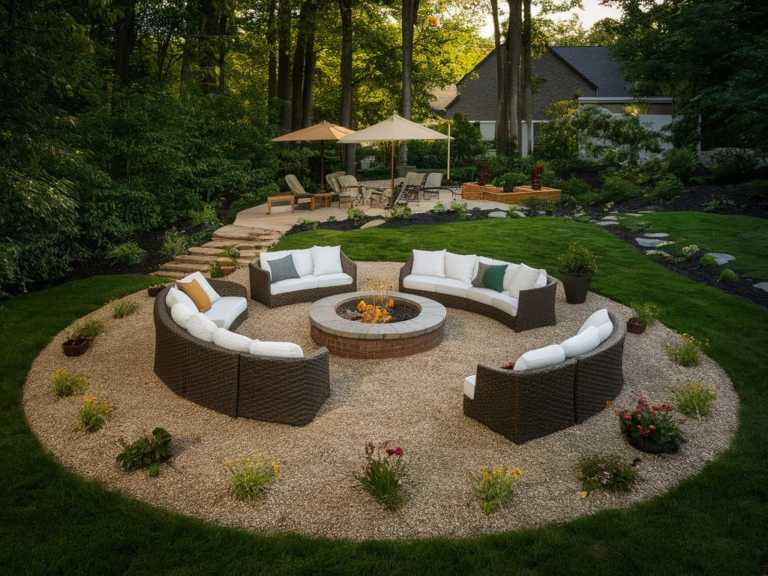
22. Install a Fire Pit Area Within the Patio
A dedicated fire pit area, whether a built-in feature or a freestanding unit on part of the patio, becomes a natural gathering point and extends how late into the evening (and how far into fall) the space gets used.
23. Add a Pergola With Climbing Vines
Training a climbing vine (wisteria, clematis, climbing hydrangea) up a pergola structure over the patio adds a layer of natural, changing texture overhead that a bare structure doesn’t achieve on its own.
24. Install Outdoor Curtains Along a Pergola
Outdoor curtain panels hung from a pergola or overhead structure add privacy, shade control, and a softening visual layer around an otherwise hard-edged concrete space.
Furnishing & Styling the Space
25. Anchor the Space With an Outdoor Rug
An outdoor rug, even on a concrete surface, does the same visual work it does indoors — defining a seating zone and softening the hard material underfoot.
26. Layer String Lights or Bistro Lighting
String lights strung overhead, especially under a pergola or between two fixed points, instantly change how a concrete patio feels in the evening.
27. Group Furniture Into Defined Zones
Rather than spreading furniture evenly across the whole slab, grouping it into distinct zones (a dining area, a lounge area) makes a large concrete patio feel more intentional and less like one undifferentiated gray expanse.
28. Add a Mix of Potted Plants at Varying Heights
A grouping of potted plants in varying heights along the edges of the patio breaks up the flatness of the concrete and adds color and texture without any permanent changes.
29. Install an Outdoor Kitchen or Grill Station
A dedicated grill or outdoor kitchen area, even a simple cart-based setup, gives the patio a clear function beyond just sitting, and tends to be where people naturally gather during a gathering.
30. Add a Daybed or Oversized Lounge Seating
An oversized outdoor daybed or sectional changes the whole feel of a patio from “a few chairs outside” to a genuine extension of the living space.
31. Incorporate a Water Feature
A small fountain or water feature, even a compact tabletop version, adds ambient sound that makes a hard-surfaced concrete patio feel calmer and more considered.
32. Add Shade Sails for a Modern Overhead Option
Shade sails, stretched between posts or an existing structure, provide sun coverage with a more modern, angular look than a traditional pergola or umbrella.
What I’d Actually Do First
If I were starting with a plain gray slab today, I wouldn’t jump straight to stamping or an overlay. I’d stain it first — even just a simple, even stain in a warm or charcoal tone — add a defined border, and bring in an outdoor rug and some grouped furniture. That combination alone, done over a single weekend for a few hundred dollars, changes how the whole space reads more than almost any single bigger project, and it tells you a lot about whether you want to invest further in stamping, overlays, or structural additions down the line.
FAQs
Can I stain or resurface a concrete patio myself, or do I need a contractor? Staining and scoring are both reasonably DIY-friendly for a motivated homeowner with a weekend to spare. Stamping and overlays require more specialized tools and timing (the concrete has to be worked while curing), so those are more commonly left to a contractor.
How long does a concrete stain typically last outdoors? With a proper sealant coat and reapplication every few years, a quality concrete stain can last well over a decade, though high-traffic areas may show wear sooner and benefit from periodic resealing.
Is stamped concrete as durable as stone or pavers? Generally yes for normal patio use — stamped concrete holds up well to regular wear, though it can crack over time like any concrete slab, especially in climates with significant freeze-thaw cycles.
What’s the cheapest way to improve a plain concrete patio? An outdoor rug, some potted plants, and string lighting require no construction at all and can transform how a plain slab feels for well under $200 total.
Does resurfacing fix structural cracks, or just cover them? A standard overlay mostly covers surface-level imperfections — if a slab has significant structural cracking or settling, that issue should be addressed first, or it’s likely to telegraph through the new surface over time.