31 Luxury Hotel Bed Ideas That Make Your Bedroom Feel Like a Five-Star Suite (Without the Five-Star Bill)
For about two years I stayed in a bedroom that I kept calling “fine.”
The bed was fine, the sheets were fine, and then I spent one night at a boutique hotel, slid into a bed that felt like a very expensive cloud, and came home to my own mattress feeling personally offended by it.
Here’s the thing I figured out after way too many hours of research and a few returns I’m not proud of: the luxury hotel bed look is not about one big purchase.
It’s about layers, proportions, and a handful of small decisions hotels make on purpose.
Once you know them, you can copy almost all of it at home for a fraction of the cost.
I’ve pulled together 31 luxury hotel bed ideas below, covering everything from bedding and pillows to headboards, lighting, and the unglamorous maintenance habits that keep it all looking crisp.
Whether you’re working with a studio, a guest room, or a primary suite, there’s a mix here for every budget and every style.
If you want to know how to make a bed look like a hotel, start with the first five ideas and add from there.
1. Start With Crisp White Percale Bedding
Almost every high-end hotel starts with white, and it’s not just because it looks clean. White bedding reads as fresh, hides nothing (which is why hotels wash it so aggressively), and makes every other texture in the room look richer by contrast.
Percale is the weave to look for if you want that cool, crisp, “just pressed” feel. It’s a simple one-over-one-under weave that breathes well, so it’s especially good if you sleep warm. I’ll be real with you: white percale wrinkles easily and shows every coffee-in-bed accident. That’s the trade-off for the look.
Pro tip: Look at the weave and fiber length on the label, not just thread count. A 300-thread-count long-staple cotton percale will almost always feel better than a 800-count sheet made from short fibers.
2. Use the Three-Layer Hotel Bed Method
This is the one structural trick that makes the biggest difference. A hotel bed is built in layers: a fitted sheet, a flat top sheet, and then a duvet or coverlet on top. Most of us skip the flat sheet at home, which is exactly why our beds look flat and casual.
The flat sheet does a real job. It sits between you and the duvet, so you wash the thin layer weekly and the heavy layer a few times a year. It also gives you that clean fold at the top, which brings me to idea three.
3. Fold Back the Top Sheet in a Clean Cuff
That crisp band of white at the top of the duvet is the single most “hotel” detail there is. Fold your flat sheet over the top edge of the duvet about 10 to 12 inches, and smooth it once with your hand.
It takes ten seconds. If you only change one thing about how you make your bed this week, make it this.
4. Go Big With an Oversized Duvet Insert
A skinny duvet is the fastest way to ruin the look. Hotels use inserts that are full and fluffy, and the cover is usually sized so the insert actually fills the corners. A good rule is to buy an insert one size up from your bed (a king insert in a queen cover works well if you like a very plush look).
If you’re allergic to down or just don’t want to spend the money, a quality down-alternative insert gets you most of the way there. I’d spend my budget on the insert before I’d spend it on a fancy cover, since the insert is what gives the bed its shape.
5. Stack Pillows the Way Hotels Do
A standard hotel formula is two or three layers of pillows at the head. Start with two sleeping pillows against the headboard, then two euro shams (the big 26-inch squares) in front, and finish with one small lumbar or accent pillow in the center.
Honestly, you don’t need to follow this exactly. But the difference in depth between a bed with five pillows and a bed with two is huge, and it’s probably the most noticeable change you can make for under $100.
Pro tip: Buy pillow inserts one size bigger than your pillow covers. A stuffed, slightly overfilled pillow holds its shape; a flat, undersized insert slumps within a day.
6. Use Euro Shams for Instant Height
Euro shams are what give a hotel bed that tall, tailored back line. They sit upright against the headboard and make a bed look finished even when you’ve done nothing else. Choose them in the same fabric as your duvet cover, or a slightly different texture in the same color family.
One thing I learned the hard way: don’t buy them too thin. Euro shams that flop over defeat the whole point, so look for ones with a firm fill you can prop up without leaning on a wall.
7. Fold a Coverlet or Blanket at the Foot of the Bed
Hotels almost always place a folded layer across the bottom third of the bed. It’s a quilted coverlet, a chunky knit throw, or a lightweight blanket in a contrasting texture. It does a few jobs at once: it adds visual weight, it gives you an extra layer on cold nights, and it protects the duvet from shoes and suitcases (or in your case, the cat).
Fold it in thirds lengthwise and lay it straight across. Don’t drape it casually unless you’re going for a lived-in look.
8. Add a Bed Runner or Bed Scarf
A runner is the more decorative cousin of idea seven. It’s a narrow strip of fabric that crosses the bed about 18 inches from the foot, and it’s a quick way to introduce a second color or pattern without committing to a whole new duvet.
I like runners in textured linen or a soft velvet. A tip: choose one that’s a shade deeper than your bedding rather than a contrast color. It looks more expensive that way.
9. Install a Tall Upholstered Headboard
If there’s one piece of furniture that signals “luxury hotel bed,” it’s a tall upholstered headboard. Hotels typically use headboards that rise well above the pillows, often 48 to 60 inches from the floor, which frames the bed the way a picture frame frames art.
A tall headboard also makes a ceiling feel higher and a small room feel more intentional. If you’re renting or on a budget, a DIY headboard from plywood, foam, and fabric costs under $100 and can be done in an afternoon.
10. Try a Channel-Tufted or Vertical-Line Headboard
If a plain headboard feels too simple, vertical channel tufting adds that tailored hotel-suite look without being fussy. The vertical lines also draw the eye upward, which helps if you have standard-height ceilings.
I’d pick a performance fabric or a tight-weave velvet here. Loose-weave fabrics snag on hair, jewelry, and everything else, and a headboard is the thing your head literally lives against for eight hours a night.
11. Build a Wall-Mounted Panel Headboard
Wall-mounted headboards are all over upscale hotels because they make the whole wall feel like part of the bed. A panel of upholstered boards, a wood-slat feature wall, or even oversized molding painted in a deeper shade does the same job.
The best part is that it works with any bed frame, even a basic metal one. For a small apartment, this is one of my favorite luxury hotel bed inspo ideas because it adds a feature wall and a headboard in one project.
12. Add a Quality Mattress Topper
Here’s a secret about hotel beds: a lot of them have a thick topper or pillow-top layer on a decent, not insane, mattress. That’s why the surface feels so plush.
If your mattress is fine but not dreamy, a 2- to 3-inch topper is often the cheapest way to get that hotel feel. Memory foam is more contouring, while a down-alternative or wool topper feels more cloud-like. Budget around $100 to $300 for something decent.
Pro tip: A topper can’t fix a sagging mattress. If you can see or feel a dip in the middle, replace the mattress first and add a topper after.
13. Invest in Hotel-Quality Pillows
If you’ve ever wondered why hotel pillows feel better than yours, it’s partly that they’re new, and partly that they’re made with a high fill-power down or a dense down-alternative. They’re plump, supportive, and replaced often.
I replace my sleeping pillows every two years now. The “fold in half” test is an easy check: if you fold the pillow and it doesn’t spring back, it’s done.
14. Choose the Right Sheet Fabric for How You Sleep
This is where people get overwhelmed, so here’s the short version. Percale feels crisp and cool, sateen feels silky and slightly warmer, and linen feels relaxed and gets softer every wash. All three can look luxurious, so it comes down to how you sleep and how much ironing you’re willing to do.
| Fabric | Feel | Best For | Trade-Off |
|---|---|---|---|
| Percale | Crisp, cool, matte | Hot sleepers, classic hotel look | Wrinkles easily |
| Sateen | Smooth, silky, slight sheen | Cooler rooms, a plush feel | Can snag; sleeps warmer |
| Linen | Textured, airy, relaxed | Lived-in luxury, all seasons | Higher cost; wrinkled by design |
| Microfiber | Soft but synthetic | Tight budgets, easy care | Traps heat; rarely feels luxe |
15. Stick to a Tonal Neutral Palette
Look at any luxury hotel photo and you’ll notice there’s barely any color. Ivory, cream, warm greige, and soft taupe layered together create depth through texture instead of contrast, and that quiet look photographs beautifully and feels calming in person.
The trick is to vary the shade slightly and vary the texture a lot. A white duvet, an ivory coverlet, and a greige bed runner look curated. Three identical whites look like a mistake.
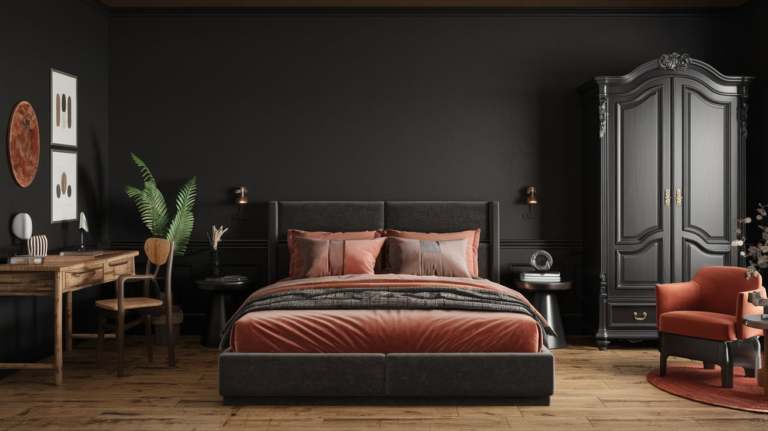
16. Go Dark and Moody for a Boutique Hotel Vibe
Not every luxury hotel is white and airy. Boutique hotels love charcoal, deep navy, forest green, and even chocolate brown, usually paired with warm metallics and low lighting.
If you’re drawn to the dark bedroom look, keep your bedding light enough that the bed remains the star. A charcoal wall with crisp white linens is dramatic and surprisingly easy to live with.
17. Use Matching Bedside Lamps
Symmetry is a big part of the hotel look. Two identical lamps on two identical nightstands frame the bed and instantly make it feel balanced and intentional.
You don’t need expensive ones. What matters is that they match in height and scale, and that the shade is tall enough to sit at roughly eye level when you’re sitting up in bed, so the light doesn’t glare in your face.
18. Swap Nightstands for Floating Shelves
Wall-mounted nightstands are a common hotel move, and they work particularly well in small bedrooms. They free up floor space, make the room look larger, and give the bed a cleaner, more modern silhouette.
A tip from experience: install them at about the height of your mattress top, or a couple of inches above. Too low and you’ll be reaching down for your phone; too high and they look awkward next to the bed.
19. Mount Plug-In Wall Sconces
Wall sconces over the bed or beside it are one of the most upscale lighting ideas you can borrow from hotels. They clear the nightstand, add warm ambient light, and look architectural.
If you’re renting, plug-in sconces with a cord cover mean you don’t need an electrician. I’d choose ones with a swing arm so you can aim the light for reading.
Pro tip: Hide the cord with a paintable cord cover in the same color as your wall. It takes five minutes and makes plug-in sconces look hardwired.
20. Choose a Tailored Bed Skirt or a Clean Platform Base
What’s under the mattress matters more than you’d expect. Hotels either use a crisp, tailored bed skirt or a platform frame with a clean edge, and they almost never leave bare box springs or metal legs on display.
If your frame is ugly, a tailored skirt with a split corner is an inexpensive fix. If you like storage under your bed, a longer skirt hides containers while still looking polished.
21. Layer in Washed Linen for Relaxed Luxury
A washed linen duvet cover is the “quiet luxury” version of the hotel bed. It’s intentionally rumpled and gets softer every time you wash it, which is a relief if you’re the type who can’t keep a bed perfectly made.
It’s also pricier than cotton, often $150 to $350 for a cover. Honestly, I think it’s worth it if you’re buying one thing to keep for years.
22. Add One or Two Velvet Accent Pillows
Velvet is the easy way to add richness without overwhelming a neutral bed. One or two smaller velvet pillows in a deeper tone, like olive, rust, or navy, give the bed a layered, designed feel.
Keep it to the accent pillows. A velvet duvet in a hot climate is a mistake I watched a reader describe in a comment on my site, and I’d prefer you didn’t repeat it.
23. Place a Bolster Pillow for a Tailored Finish
Bolsters (the long cylindrical pillows) are a classic hotel detail that adds a polished, almost formal touch. Lay one across the front of your pillow stack, in front of the euro shams, or use two at either end of a daybed-style setup.
They’re not essential, but they’re a good “finishing” piece if you already have the basics down.
24. Anchor the Bed With a Layered Rug
A rug that sits partly under the bed and extends out the sides and foot defines the sleeping zone and keeps your feet off a cold floor in the morning. For a queen bed, an 8×10 rug is generally right; for a king, go 9×12 if the room allows.
Skip the too-small rug. A 5×8 that only sits at the foot of the bed looks like a doormat.
25. Hang Floor-to-Ceiling Curtains
Hotels hang drapery high and wide, usually near the ceiling and extending past the window frame. That makes the window look bigger and the ceiling taller.
Pair sheer panels with a blackout layer, and you get both soft daytime light and a dark room for sleeping. This is one of the best “bang for the buck” ideas on the list if your windows currently have short curtains or a plain blind.
26. Place an Upholstered Bench at the Foot of the Bed
A bench at the end of the bed is both pretty and practical: you sit on it to put on shoes, drop your bag there, and it adds a finishing line to the base of the bed. Hotels love it because it adds a place to put luggage.
It does need space. You should have at least 30 inches of clearance beyond the bench, so skip it in a tight room.
27. Hang Oversized Art or a Mirror Above the Headboard
An undersized picture above a bed looks lost. Hotels go for a large single piece, or a pair, that spans about two-thirds of the width of the headboard.
A big mirror works too, and reflects light, which brightens a smaller room. Just be mindful of what it reflects, since a mirror pointed at a cluttered closet isn’t doing you any favors.
28. Style the Nightstand Like a Hotel Suite
Keep it simple: a lamp, a small tray, a carafe or water glass, a book or two, and a little greenery. A tray corrals the small stuff, which means your nightstand looks edited instead of cluttered.
I keep my phone charger tucked in a drawer with a cord hole drilled in the back. It’s a small thing, but it removes the one thing that makes a nightstand look “lived-in.”
29. Add a Signature Scent
Hotels know that smell is memory, which is why many have a signature scent. White tea, fig, cedar, and clean linen are popular choices for bedrooms because they feel calm rather than perfumey.
A reed diffuser or a light linen spray on the pillows works. Avoid anything heavy right at bedtime, and go easy on the spray, since you’re going to be breathing it for hours.
30. Dim Everything With Warm Light Bulbs
The lighting in a luxury hotel room is almost always warm and layered: a soft ambient glow, a reading light, and nothing harsh overhead. At home, you can copy that by swapping to warm bulbs (around 2700K) and adding dimmers or smart bulbs.
This is a cheap upgrade with an outsized impact. Cool white bulbs make even a gorgeous bed feel like a waiting room.
31. Wash and Refresh Your Bedding Like a Hotel Would
This is the unglamorous one, but it matters. A hotel bed feels luxurious partly because everything is clean, fresh, and replaced on schedule. Wash sheets weekly, pillowcases twice a week if you’re oily-skinned or sweat a lot, and use a mattress protector so you’re not washing the mattress itself.
A little habit that helped me: I own two sets of sheets and rotate them. The clean set is already folded in the closet, so there’s no excuse to let the laundry pile up.
How Much Does a Luxury Hotel Bed Cost to Recreate?
People assume this look costs thousands, but it depends where you start. Here’s a rough breakdown of what I’ve seen at three budget levels for a queen bed. Prices vary a lot by brand and region, so treat these as ballparks.
| Item | Budget | Mid-Range | Splurge |
|---|---|---|---|
| Sheet set (percale or linen) | $40–$80 | $100–$200 | $250–$500 |
| Duvet insert | $40–$80 | $100–$180 | $250+ |
| Duvet cover | $30–$60 | $80–$160 | $200–$350 |
| Pillows (4 sleeping + 2 euro) | $60–$100 | $120–$250 | $300+ |
| Mattress topper | $60–$120 | $150–$300 | $350+ |
| Upholstered headboard | $100–$200 (or DIY) | $250–$600 | $800+ |
If you’re starting from nothing, I’d put money into the duvet insert, pillows, and sheets first. Those three alone create about 70 percent of the hotel look, and you can add the headboard and styling pieces over time.
Final Thoughts: Where I’d Start If I Were Doing This Again
If I were starting from scratch tomorrow, I’d skip the decor and go straight to the foundation. I’d buy a really good duvet insert, add the flat sheet I’d been ignoring, stack four pillows properly, and fold that sheet back into a clean cuff. That alone changed my bed more than any single purchase I made afterward.
Then I’d work on lighting, because warm bulbs and a couple of matching lamps cost very little and change how the whole room feels at night. The headboard, the rug, and the styling can come later, and honestly, some of them might not matter to you. A luxury hotel bed isn’t one look. It’s a feeling of being well taken care of, and you can build that one layer at a time.
Frequently Asked Questions
How do I make my bed look like a hotel bed?
Layer it. Use a fitted sheet, a flat sheet, and a full duvet or coverlet, then fold back the flat sheet at the top. Add four to six pillows, including two euro shams, and a folded blanket at the foot. Those layers do most of the work.
What kind of sheets do luxury hotels use?
Most hotels use white cotton percale or sateen, usually with a thread count in the 250 to 400 range. They focus on fiber quality and durability rather than very high thread counts, because the sheets need to survive constant washing.
Do I really need a top sheet?
You don’t need one, but it’s a big part of the hotel look and the hotel hygiene logic. The top sheet protects your duvet, so you wash it more often than the heavy cover, and it makes the bed easier to keep tidy.
How many pillows should a luxury hotel bed have?
For a queen or king bed, four to six is typical. That usually means two or four sleeping pillows, two euro shams, and one decorative pillow. For a smaller bed, three or four is plenty.
Is a mattress topper worth it for a hotel-style bed?
If your mattress is structurally fine but feels firm or worn, yes. A good topper in the $100 to $300 range can change the feel of the bed significantly. If your mattress is sagging, replace the mattress instead.
How often should I replace my bedding to keep the hotel look?
Sheets typically last two to five years depending on quality and how often you wash them. Pillows should be replaced every one to two years, and duvet inserts can last five to ten years if you use a cover and fluff them regularly.
Can I get a luxury hotel bed look on a small budget?
Yes. Start with a good insert, white sheets, and a pillow stack, then add lighting upgrades. A DIY headboard and warm bulbs fill in the rest for very little money.